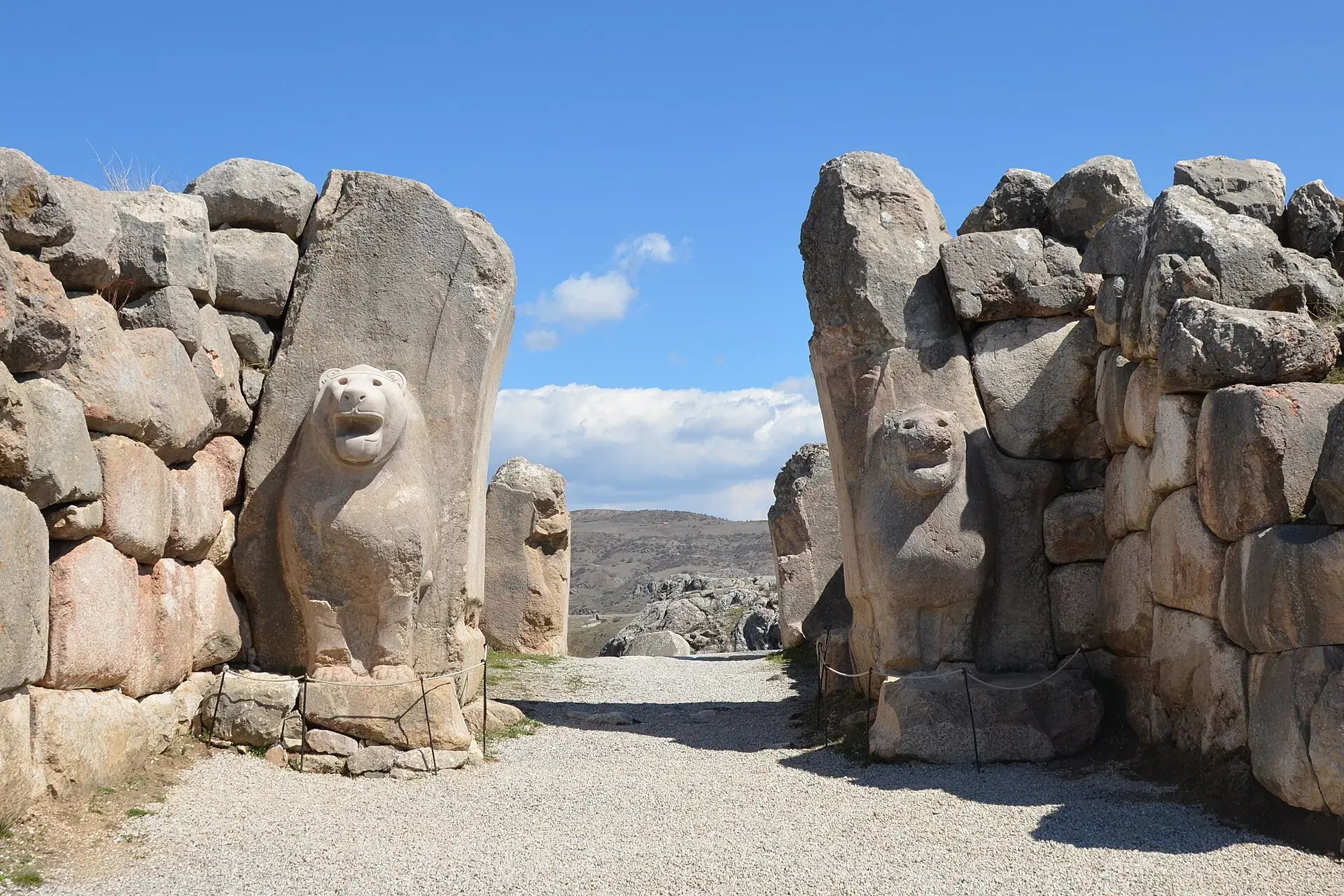
Hittite civilization
Hittite civilization shaped Central Anatolia, Black Sea between c. 1650, 1180 BCE. Its cities, monuments and inscriptions are part of Türkiye’s layered heritage; the sites below show where to see its legacy.
Hittite civilization
The Hittites built one of the ancient world's great powers from their capital at Hattuşa, near modern Boğazkale in Çorum. Their cuneiform archives, written in Hittite and other languages, record treaties, laws, diplomacy and daily administration. The peace treaty with Egypt after the Battle of Kadesh is among the earliest surviving international agreements. Hattuşa's lion gate, great temple and cyclopean walls still communicate the scale of the state; nearby Yazılıkaya is a rock sanctuary of gods and kings. Hittite power rested on chariots, vassal kingdoms and control of trade routes, but its art and religion were deeply Anatolian, blending Hattic, Hurrian and Luwian traditions. After the collapse around 1180 BCE, smaller Neo-Hittite kingdoms carried on Luwian inscriptions and monumental sculpture in the southeast.
Where to see it
Related civilizations
Opening hours, prices and transport change. Confirm details with the official venue before you go.