Myra
Myra is the ancient heart of Demre, famous for rock-cut Lycian tombs, a Roman theatre and the nearby church of St Nicholas. The tombs and theatre sit in the same archaeological landscape, so give them time together.
Myra
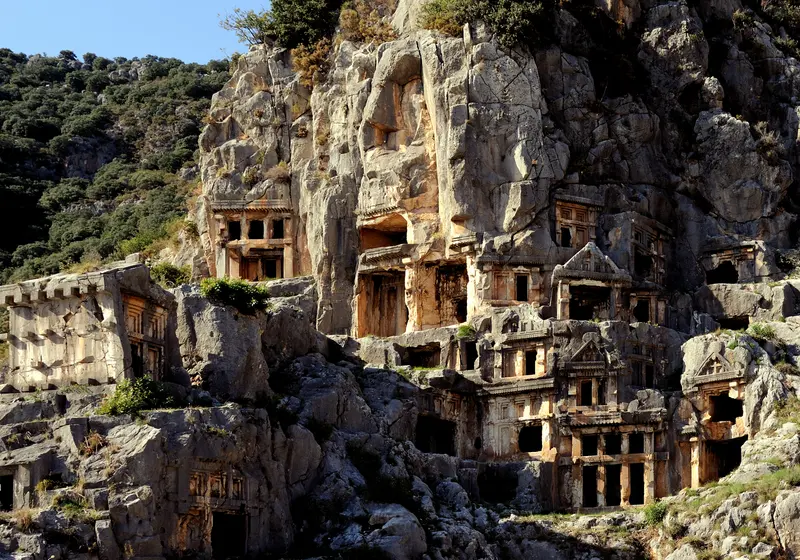
The Lycian necropolis at Myra is carved into the cliff above the theatre, with house-shaped tombs and reliefs that recall the region's distinctive funerary architecture. Below, the Roman theatre is large and well preserved; the plain around it holds the remains of the city.
Myra was an important city in the Roman and Byzantine periods. St Nicholas served as bishop here in the 4th century; his church in Demre is a separate site a short drive or walk away. The two visits pair naturally: tombs, theatre and the later Christian story of the same landscape.
Top attractions
Lycian rock tombs
House-shaped tombs cut into the cliff, some with carved reliefs. View them from the path opposite the theatre.
Roman theatre
A large, steep auditorium built into the hillside, with views over the ancient city.
St Nicholas Church
The bishop's church in Demre, known internationally as the church of Santa Claus.
Practical notes
Getting there
Demre is about two hours from Antalya and 45 minutes from Kaş. Local minibuses stop near the site.
Best time to visit
April–June and September–October. Early morning is best for the tombs and theatre.
- Parts of the site involve stairs and uneven stone; wear shoes with grip.
- The theatre and tombs are exposed; carry water and avoid midday heat.
- Check whether the church and archaeological site have separate tickets and hours.