Antalya and the Lycian Coast
A mix of Roman ruins, turquoise water, pine-covered mountains and small coastal towns.
Best time
May to June and September to October; July to August is hot and busy.
Province
Antalya
Day-by-day itinerary
Day 1: Antalya old town
- Morning: Kaleiçi, Hadrian's Gate, Yivli Minare and the old harbour.
- Afternoon: Antalya Museum (excellent Roman sculptures) and Konyaaltı or Lara beach.
- Evening: dinner at the harbour; try piyaz, hibeş and grilled fish.
Day 2: Perge, Aspendos and Side
- Morning: Perge ancient city.
- Midday: Aspendos theatre (one of the best-preserved Roman theatres).
- Afternoon: Side for the Temple of Apollo and beach.
- Evening: return to Antalya or stay in Side.
Day 3: Kaş, Kalkan or Olympos
- Option A: drive to Kaş; boat trip, diving or a walk around the harbour.
- Option B: Kalkan for a quiet boutique-hotel stay and beach clubs.
- Option C: Olympos for the eternal flames (Yanartaş) and Lycian ruins.
- Evening: seafood on the coast.
Ancient cities
Perge
A Pamphylian city with a monumental gate, colonnaded street, stadium, baths and a theatre. Most of its finest sculpture is now in the Antalya Museum.
Aspendos
Home to one of the best-preserved Roman theatres in the Mediterranean, still used for performances. The aqueducts on the plain below are equally impressive.
Side
A peninsula city with a theatre, Roman baths, colonnaded streets and the Temple of Apollo right by the sea. The beach and the ruins sit together.
Termessos
A dramatic Pisidian city high in the Taurus Mountains, never taken by Alexander. The theatre, agora and rock-cut tombs sit inside a national park.
Phaselis
A Lycian port city with three harbours, a main street, theatre and pine-shaded beaches. It is an easy stop between Antalya and Kemer.
Olympos
A Lycian city beside a river and a long beach, reached through the Beydağları-Olympos National Park. Nearby Yanartaş burns with natural gas flames.
Myra and St Nicholas Church
Lycian rock tombs, a Roman theatre and the Byzantine church of St Nicholas in Demre. The church is linked to the Santa Claus legend.
Patara
One of Lycia's oldest cities, with a theatre, baths, a colonnaded street and a 14 km beach. The beach is a protected Caretta caretta nesting area.
Xanthos and Letoon
The Lycian capital and its religious sanctuary, jointly inscribed by UNESCO. The site preserves some of the longest texts in the Lycian language.
Arykanda
A terraced Lycian city above Finike, known for its steep setting and well-preserved civic buildings. It is quieter and more atmospheric than the coast's famous ruins.
Limyra
A Lycian city with more than 400 rock tombs, a theatre and an acropolis. The Roman bridge and the tomb of Pericles are among its notable monuments.
Sillyon
A hilltop Pamphylian city with Hellenistic walls and wide views over the coastal plain. The climb is steep, but the setting is rewarding.
Simena and Kekova
A Lycian coastal village with a castle, sarcophagi and the sunken city of Kekova. Boat trips from Üçağız are the usual way to see the submerged ruins.
Nature and landscapes
Düden Waterfalls
Two waterfalls in the city: the upper falls in a park and the lower falls dropping straight into the Mediterranean. Boat trips from the old harbour pass the lower falls.
Kurşunlu Waterfalls
A shaded nature park with small waterfalls, pools and forest walks, about 20 km from the city centre. It is a good half-day escape in summer.
Manavgat Waterfall
A wide, powerful waterfall on the Manavgat River, close to Side. The surrounding tea gardens and picnic areas make it an easy family stop.
Köprülü Canyon
A 14 km canyon with rafting, walking, swimming and Roman bridges. The national park also protects the ancient city of Selge and the St Paul Trail.
Göynük Canyon
A green canyon near Kemer with a turquoise pool, zipline and a short walk to natural pools. It is on the Lycian Way.
Tahtalı Mountain
A 2,365 m peak above Kemer, reached by cable car. The summit looks over the Mediterranean and the Beydağları range; sunrise trips are popular.
Karain Cave
A large limestone cave northwest of Antalya with traces of human occupation going back tens of thousands of years. It is useful for understanding the region's deep history.
Dim Cave
A show cave in the Alanya hills with stalactites, stalagmites and a cool interior. The drive up also gives wide coastal views.
Saklıkent Ski Centre
A small ski area on Bakırlı Mountain, about 50 km from Antalya. In winter it is possible to ski and then drive down to the coast.
Ormana and the Button Houses
A village of stone-and-timber houses without mortar, near the old Seljuk road. The surrounding mountains, Eynif Plain and Altınbeşik Cave are part of the same trip.
Beaches and the coast
Konyaaltı Beach
A 7.5 km city beach backed by the Beydağları mountains, with a promenade, cafes and easy access from the centre.
Lara Beach
A wide sandy beach east of the city, known for its dunes and resort hotels. It is the easier choice for families and long walks.
Çıralı Beach
A 3.2 km protected beach next to Olympos, backed by mountains and citrus gardens. Loggerhead turtles nest here in summer.
Adrasan
A sheltered bay with a long beach, pine forests and boat trips, west of Kemer. It is a quieter base for the Lycian Way.
Kaputaş Beach
A small turquoise cove at the mouth of a canyon on the Kaş-Kalkan road, reached by a long staircase. It is beautiful but can be crowded in summer.
Patara Beach
A 14 km sandy beach backed by dunes and the ancient city. It is a protected turtle nesting area, so night access is restricted in season.
Kleopatra and Damlataş
Two Blue Flag beaches beside Alanya Castle, with clear water and a cave at Damlataş. The area is good for a combined beach and castle day.
Kaş and Kalkan
Two small harbour towns with narrow streets, boutique hotels, diving schools and boat trips. They are good bases for Kekova, Patara and the Lycian Way.
Kaleiçi, museums and city life
Kaleiçi
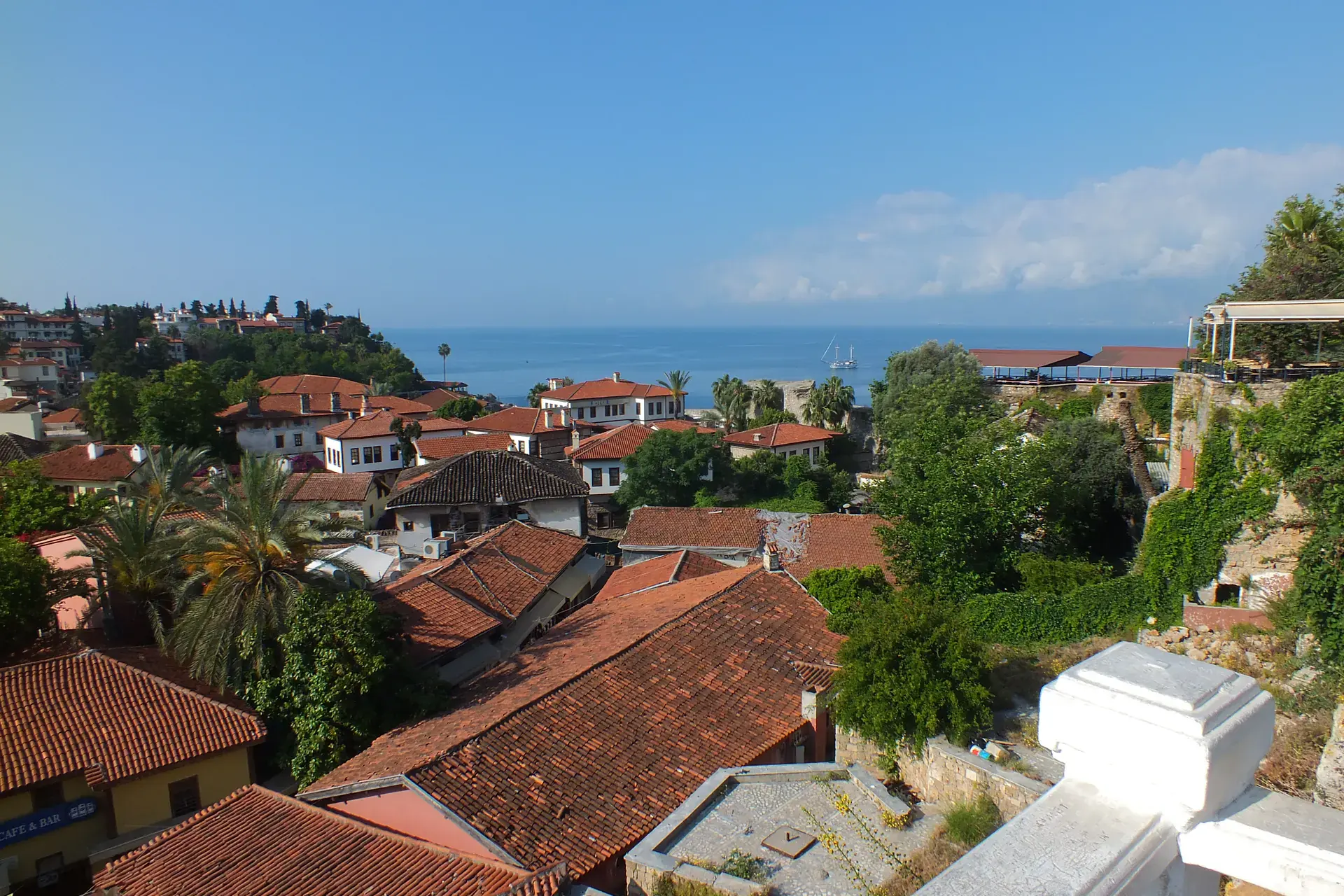
The old town inside the horseshoe-shaped walls, with Ottoman houses, boutique hotels, courtyards and the old harbour. It is best explored slowly on foot.
Hadrian's Gate
A three-arched Roman gate built for Emperor Hadrian in 130 CE, still the main ceremonial entrance to Kaleiçi.
Yivli Minaret Complex
A Seljuk complex with a fluted minaret, mosque, madrasa and tombs. The minaret is one of the symbols of Antalya.
Antalya Museum
One of Türkiye's strongest archaeology museums, especially for Roman sculpture from Perge. Allow at least two hours.
Hıdırlık Tower
A Roman tower at the southern corner of the old walls, now a viewpoint over the harbour and the sea.
Karaalioğlu Park
A large seaside park with terraces, trees and walking paths above the cliffs. It is a good place for a sunset walk.
Old Harbour
The historic marina below Kaleiçi, used for boat trips and evening walks. The cliffs and the sea are dramatic at sunset.
Sources: GoTürkiye Antalya · Antalya Museum
Food to try
Antalya piyazı, hibeş, grilled sea bass, stuffed squid, tahini bread.
Where to stay
Kaleiçi for history; Lara/Konyaaltı for resorts; Kaş/Kalkan for boutique coastal hotels.
Practical notes: Antalya Airport (AYT) is the main gateway. The Lycian Way is a long-distance trail; do short sections rather than the whole route. Roads are winding; allow extra time.